
Analog bags for slow crafting and intentional living
In a world that constantly pulls us toward our phones, the analog bag has become a powerful tool for reclaiming focus, creativity, and calm. As part of the growing analog bag trend, I decided to design and build my own analog bag (and companion box) as a hands-on, intentional project—one rooted in slow crafting and designed to support how I actually want to live in 2026.
This project wasn’t just about sewing a bag or organizing supplies. It was about asking deeper questions: What do I want to reach for when I’m bored? What kinds of projects help me feel grounded? And how can I design something that supports intentional living instead of digital distraction?
Below, I’m breaking down each part of my analog bag system, with dedicated space for photos so you can follow along, adapt ideas, or build your own version.
Why an Analog Bag Supports Slow Crafting and Intentional Living
Slow crafting is about more than working with your hands—it’s about presence. An analog bag creates a physical boundary between you and your phone by replacing scrolling with making. Instead of relying on apps for productivity, this system uses tactile projects, visible goals, and portable creativity.
By curating what goes into the bag or box, you’re not just organizing supplies—you’re setting intentions. Every item earns its place by supporting how you want to spend your time. I first learned of this tread on YouTube from Liz Arts n Crafts and I was really excited to share my own thoughts and intentions with you.
Designing and Building the Analog Bag
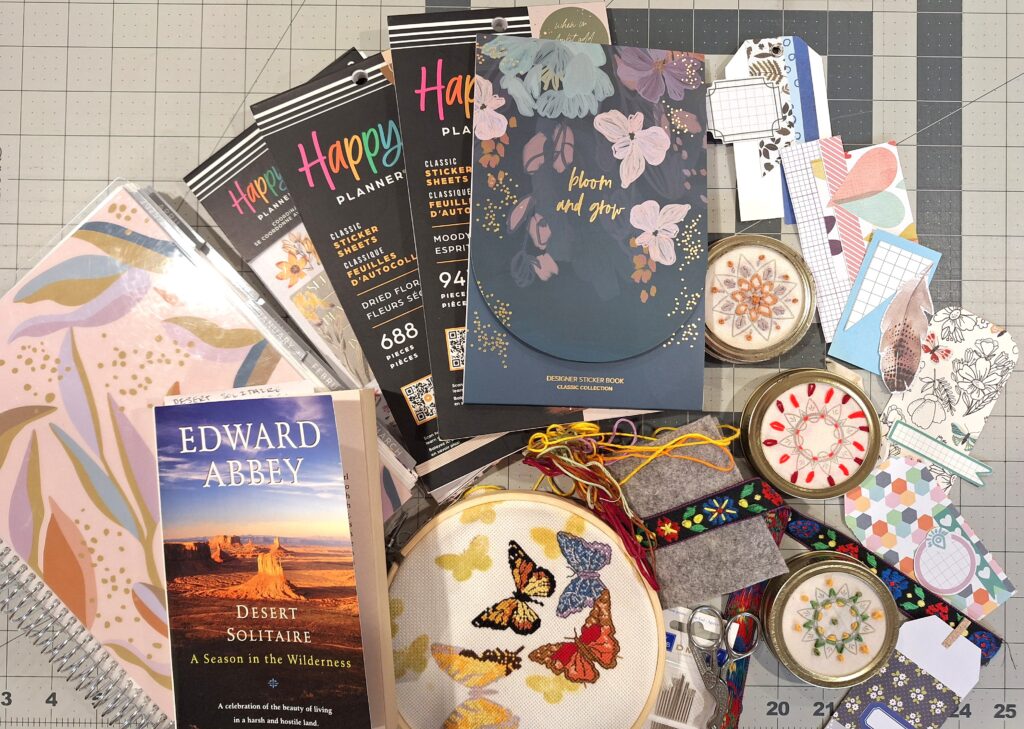
The bag itself was designed with both form and function in mind. I wanted something sturdy, portable, and beautiful enough that I’d actually want to keep it nearby. Think of it as a cross between a sewing project bag and a personal creativity kit.
When building an analog bag, I recommend thinking about:
- Size and portability
- Easy access to works-in-progress
- Sections or pouches for different project types
- Durability for daily use
Sewing the bag became its own slow crafting exercise—measuring, stitching, and making decisions without rushing. This step set the tone for the entire project.
Setting Goals for an Analog System (Without Overcomplicating It)
Before filling the bag, I spent time defining lightweight, realistic goals. Instead of productivity pressure, I focused on support. The goal wasn’t to “finish everything,” but to make it easier to choose analog activities over digital ones.
One of my favorite goal-setting books is Big Dreams, Daily Joys by Elise Blaha Cripe. In her book, Elise leads you through how to choose goals that are meaningful to where you are right now, as well as how to make them realistic and fun so you will actually follow through!
Helpful questions included:
- What do I already enjoy doing?
- What projects can be picked up and put down easily?
- What helps me feel productive without stress?
These questions guided what went into my analog box—and just as importantly, what stayed out.
Reading Challenge: Making Reading an Analog Habit
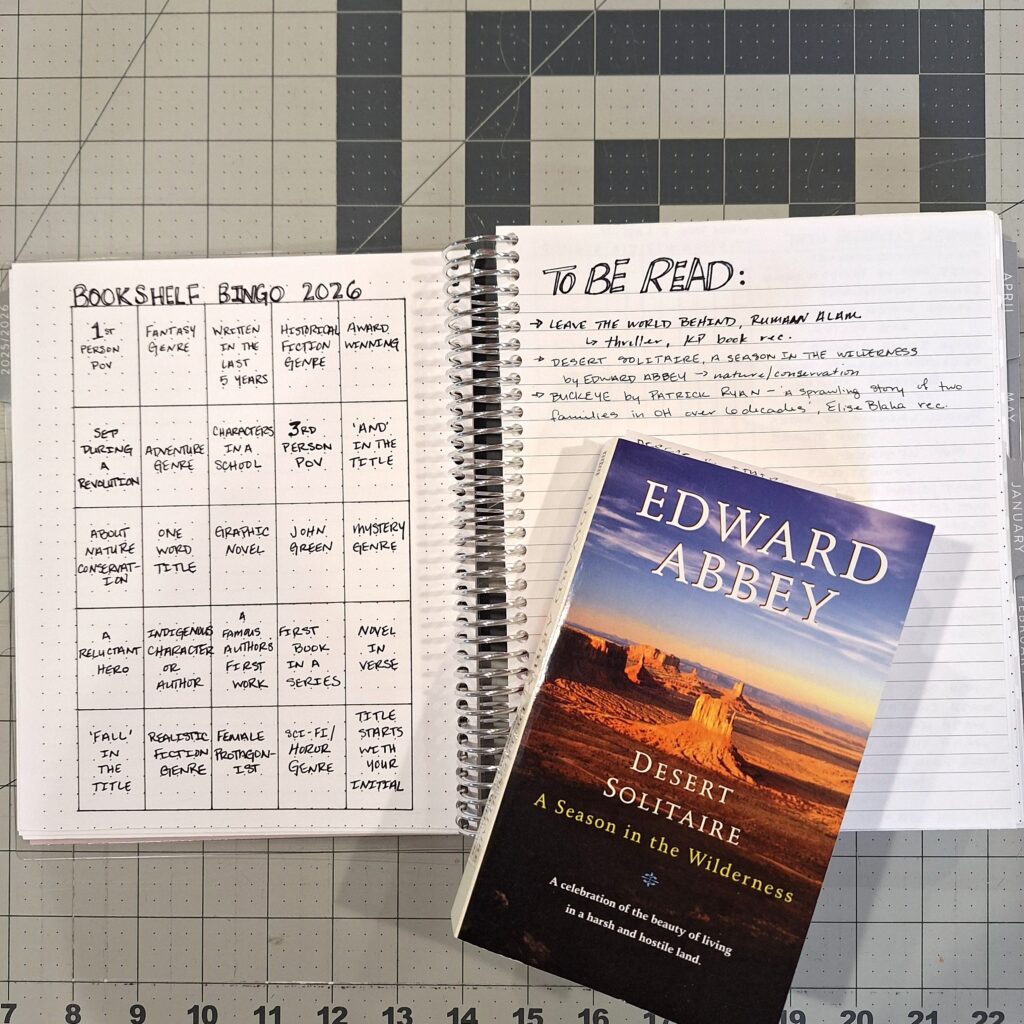
One section of my analog box is dedicated to a reading challenge. Instead of tracking progress digitally, I use simple paper trackers and bookmarks. I got the idea for my “Reading Bingo” card from the middle school teacher who was hosting my last residency. Rather than a number goal, you try to fill in the categories across, down or balckout like you would if you were playing Bingo! I will also be keeping a small paper as my bookmark where I can write thoughts, quotes, ideas or vocabulary I’d like to spend more time learning about later. This makes reading feel slower, more intentional, and more rewarding.
Including reading materials in the analog bag:
- Encourages screen-free downtime
- Creates a visible reminder to read
- Turns reading into a fun game rather than a task
This is especially helpful during evenings or travel, when grabbing a phone is the easiest default.
Scrap Paper Projects: Using What I Already Have
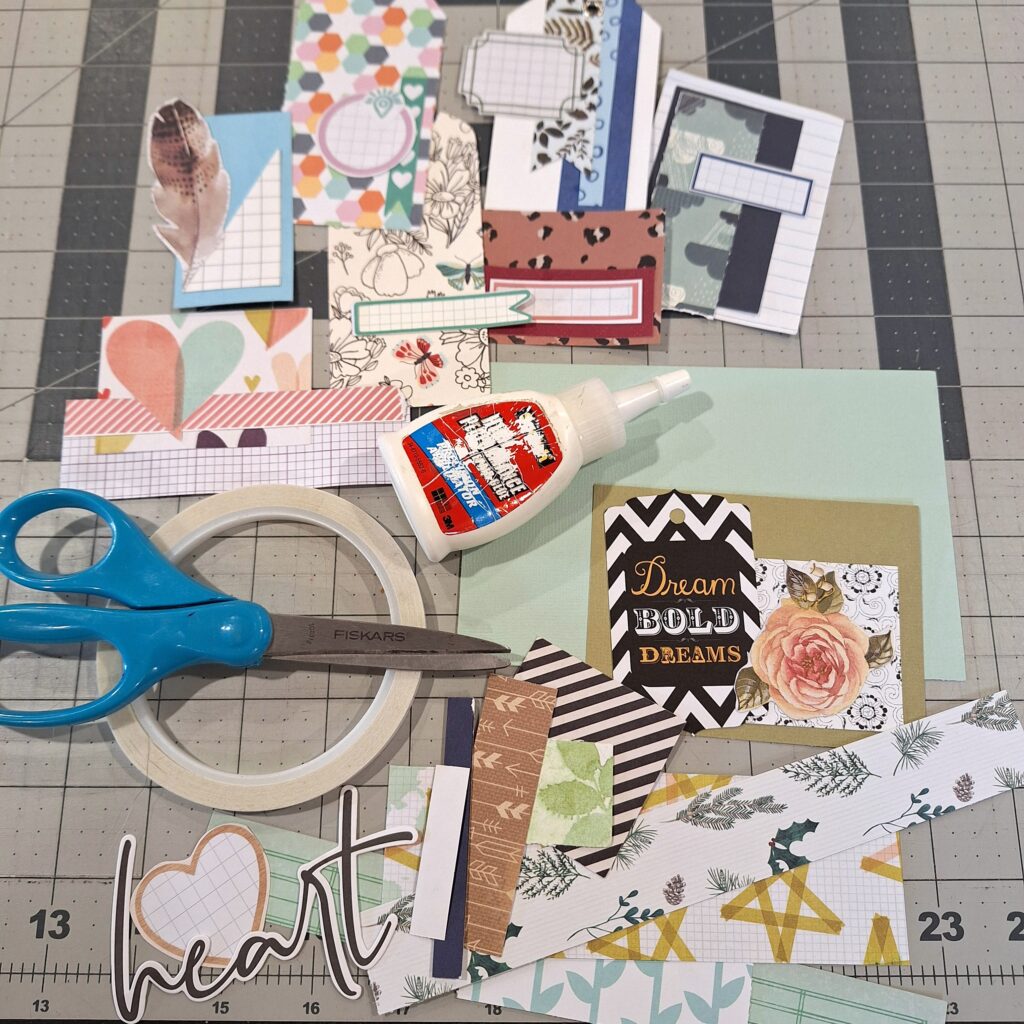
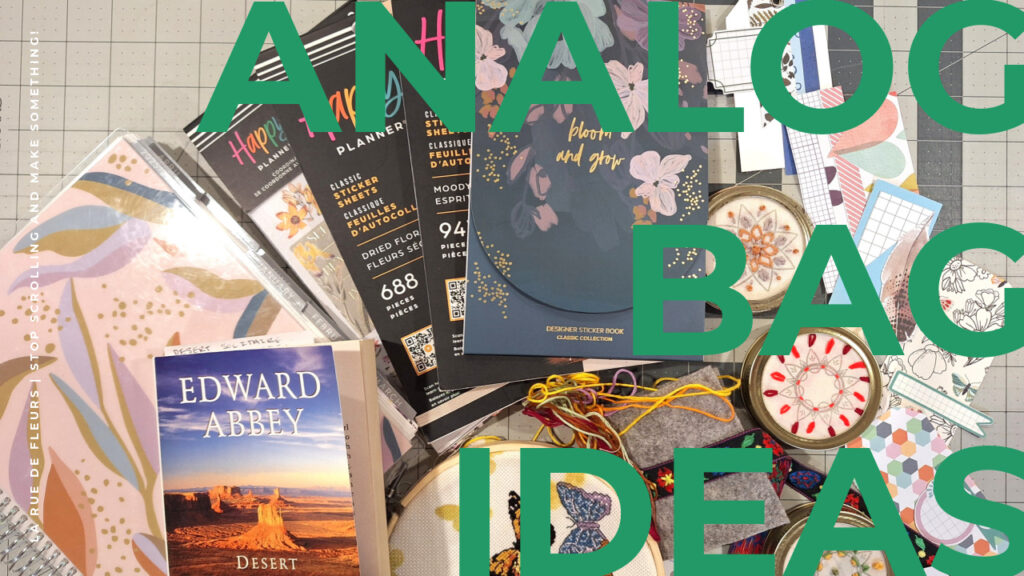
Scrap paper projects are one of the most flexible parts of my analog system. This includes leftover paper, cutoffs, test prints, and bits that would otherwise sit unused. Since I already keep way to many bits of paper, I simply pull out a small selection of pieces I might otherwise overlook to add to this project. I also include a few premade labels and cards cut to the sizes I regularly use in my memory-keeping project pages. This way I am creating embelishments I am likely to grab next time I am working in my scrapbooks.
These projects are perfect for:
- Creative warm-ups
- Collage and mixed media
- Notes, lists, and brainstorming
- Low-pressure creativity
By keeping scrap paper in my analog box, I always have something available that doesn’t require setup or commitment—ideal for slow crafting moments.
Planner Decor: Creative Planning Without Apps
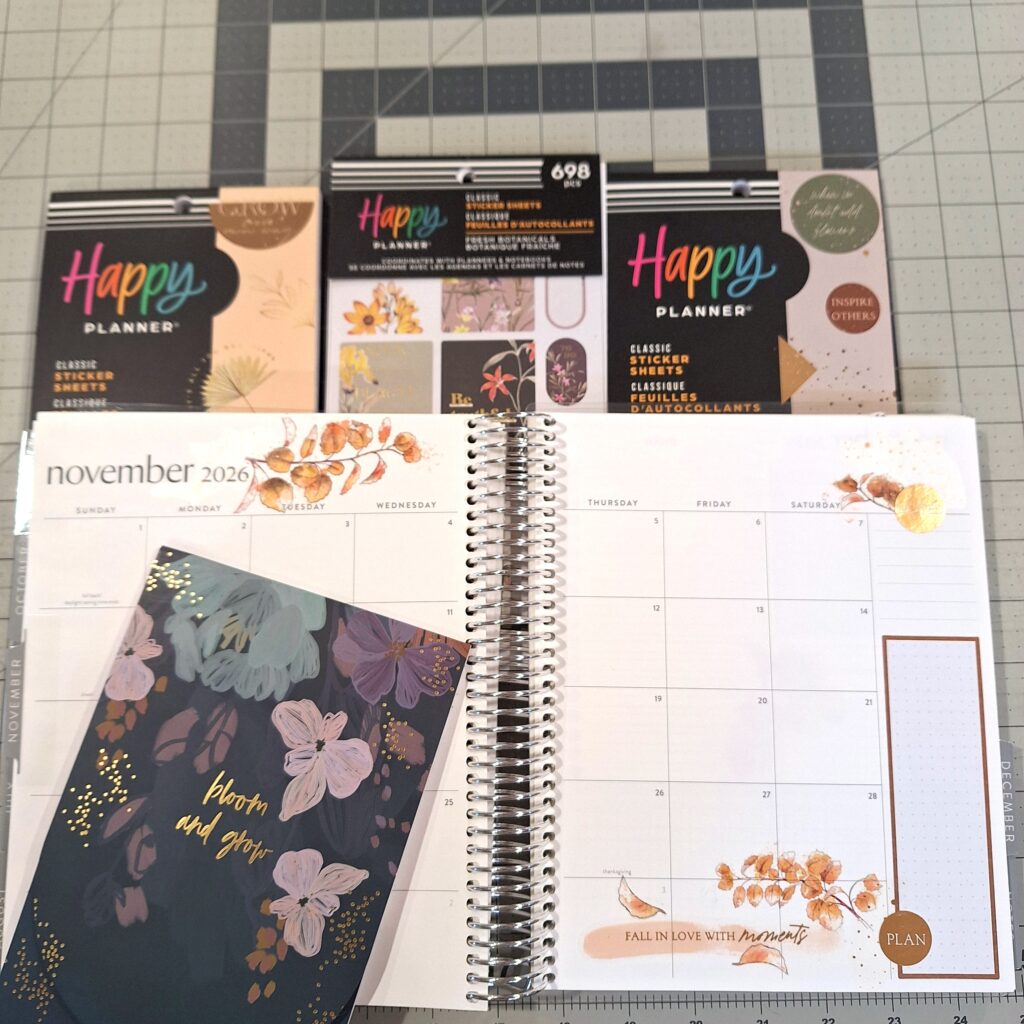
Planner decor brings creativity into everyday planning. Instead of digital planners or productivity apps, I use handmade and curated paper elements to decorate and personalize my planner. I love to add stitckers that are both functional and simply fun to keep me interested in achieving my daily to-dos.
This section of the box includes:
- Stickers and ephemera
- Washi tape
- Handwritten prompts and lists
- Seasonal or themed decor
Planner decor helps planning feel playful and creative rather than rigid, reinforcing intentional living through analog tools.
Hand Embroidery Projects: Portable Slow Stitching
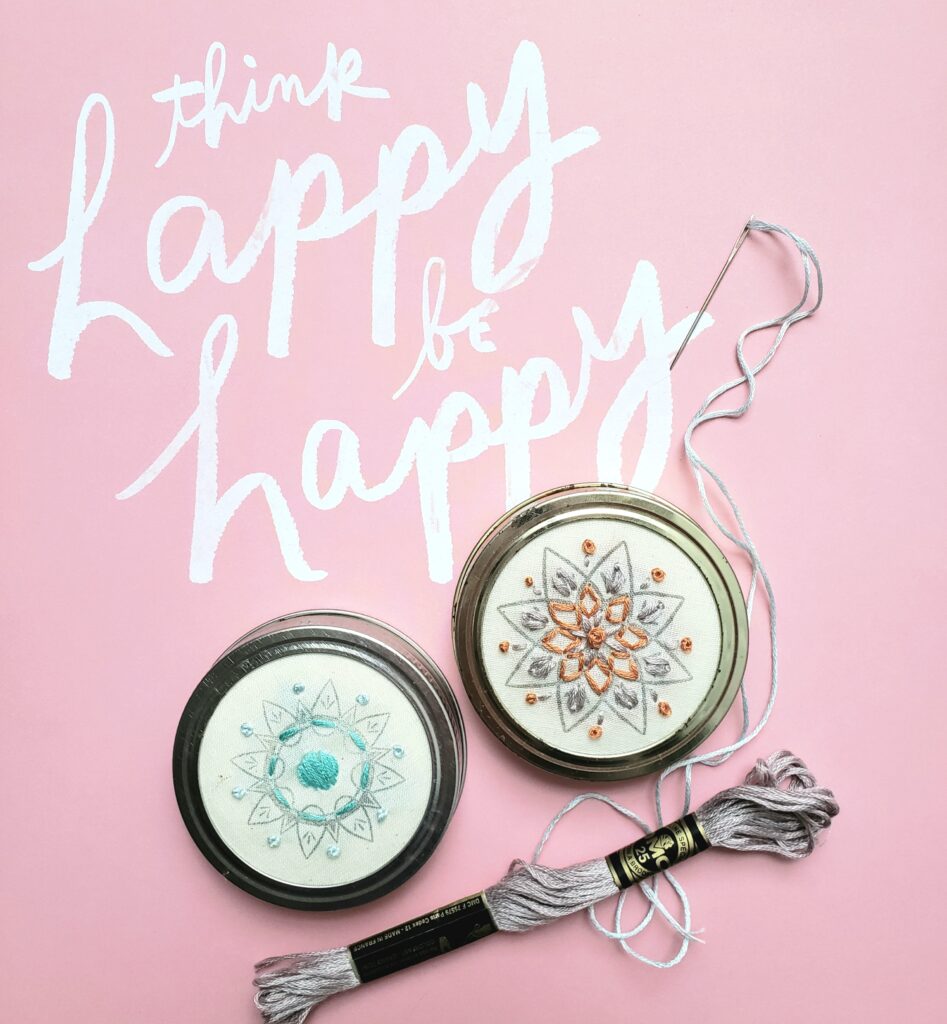
Hand embroidery is one of the core elements of my analog bag. It’s portable, calming, and perfect for filling small pockets of time. I love using these pre-stamped small hoops made from canning jar lids. The size is SO portable and easily achieved with a minimal amount of time and embroidery floss.
Why embroidery works so well in an analog system:
- Minimal supplies
- Easy to pause and resume
- Encourages mindfulness
- Produces tangible progress
Keeping embroidery in the bag ensures I always have a slow-crafting option that doesn’t require setup or screens.
Cross-Stitch Projects: Focused, Repetitive Creativity
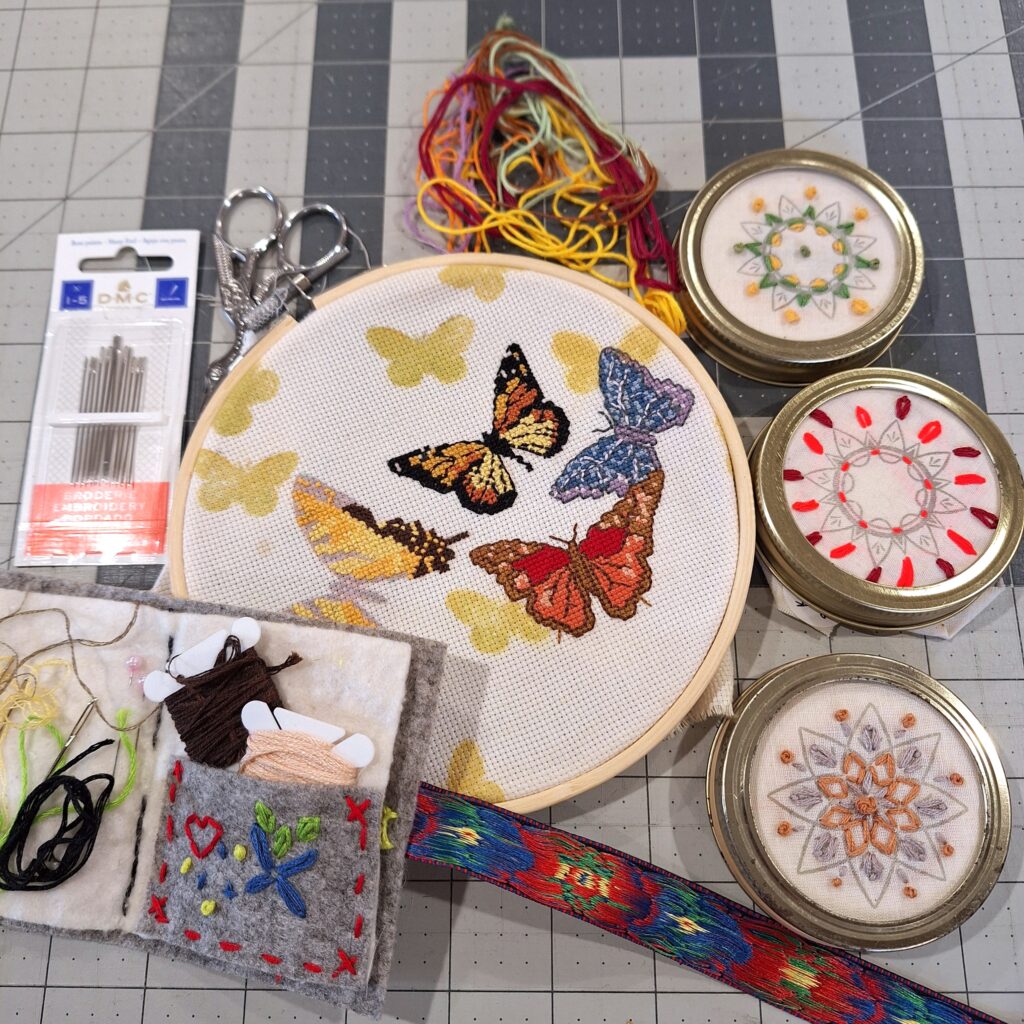
Cross-stitch offers a different kind of focus—structured, repetitive, and deeply satisfying. I have decided to include a small 6 inch round stamped butterfly project I have been picking up and putting down for *gasp* decades. Including a cross-stitch project in my analog box gives me an option for times when I want more concentration and less decision-making. Not only will the project support my current goal of staying off my phone, but it may actually help me reach my goal to finish this long-outstanding project!
This balance between freeform embroidery and structured stitching keeps the analog system versatile and engaging.
Using the Analog Bag to Stay Off My Phone in 2026
The ultimate purpose of this analog bag (or in my case, box) is simple: to make it easier to choose creativity over scrolling. By keeping everything visible, accessible, and intentional, the barrier to starting a project is lower than picking up my phone.
This system supports:
- Slow crafting habits
- Intentional living
- Creative consistency
- A calmer, more focused daily rhythm
Final Thoughts: Building Your Own Analog Bag
Your analog bag doesn’t need to look like mine. The beauty of this trend is its flexibility. Whether you sew, journal, quilt, embroider, or craft with paper, an analog bag can be tailored to your life.
Start small. Use what you have. Let the bag or box evolve. Most importantly, let it support the kind of creative, intentional life you want to live—one stitch, page, and project at a time.
To see this entire project come together in real time, be sure to watch the corresponding video on YouTube, where I walk through creating the analog bag, setting up each project, and sharing more thoughts on slow crafting and intentional living for 2026. If you enjoyed this post and found inspiration here, please like the video, subscribe to the channel, and turn on notifications so you don’t miss future sewing projects, analog systems, and creative sewing ideas. Your support helps grow this creative space and allows me to keep sharing thoughtful, screen-free projects with fellow makers and craft lovers.
Happy making, and keep an eye out for those completed projects on my YouTube, blog and IG soon! Janice
Inspiration and resources are linked where applicable. All written work and photographs are original content and are copyright protected; kindly give due credit by linking back to my website if you use or share.
(©2026, Janice Bailor // laruedefleurs.com)